Most owners can spot obvious stress — growling, cowering, frantic barking. What's much harder to catch are the quieter signals dogs give off well before things escalate to that point. Dogs are surprisingly subtle communicators, and a lot of early stress signs get mistaken for quirks, tiredness, or "just being a bit funny today."
Why the subtle signs matter most
Dogs generally don't go from calm to distressed with no warning. There's almost always a build-up — a sequence of smaller signals that, if missed or ignored repeatedly, can eventually escalate to growling, snapping, or shutting down entirely. Catching stress early means you can remove your dog from the situation, give them space, or adjust things before it becomes a bigger problem. It also means fewer moments that feel like they "came out of nowhere," when in reality, the early signs were there the whole time.
The commonly missed signals
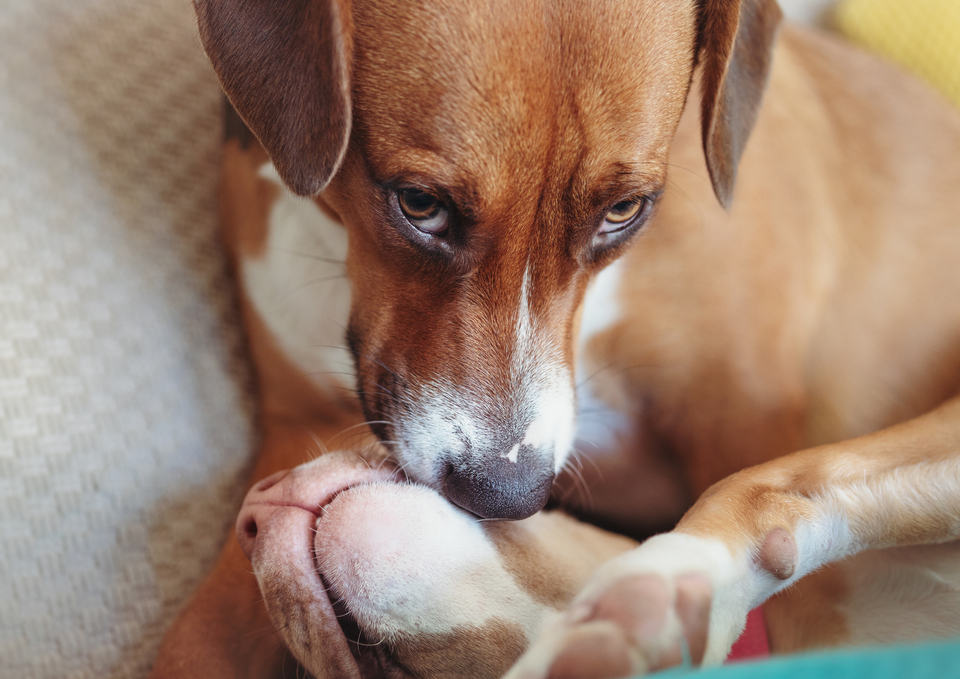
- Lip licking with no food around. A quick tongue flick when nothing food-related is happening is one of the most common and most overlooked stress signals.
- Yawning outside of tiredness. A yawn during a vet visit, a busy park, or a tense interaction is rarely about sleepiness.
- Panting when it's not hot and they haven't exercised. Stress panting looks similar to normal panting but shows up in the wrong context.
- "Whale eye" — the whites of the eyes becoming visible in a crescent shape, often when a dog feels cornered, uncertain, or protective of something.
- Excessive shaking off, as if wet, with no water involved — frequently used to release tension after something uncomfortable.
- A single raised paw or frozen stillness, particularly in an unfamiliar or overwhelming situation.
- Turning the head or body away, or a slow, deliberate walk away from something — a quiet request for space that's easy to miss if you're not watching for it.
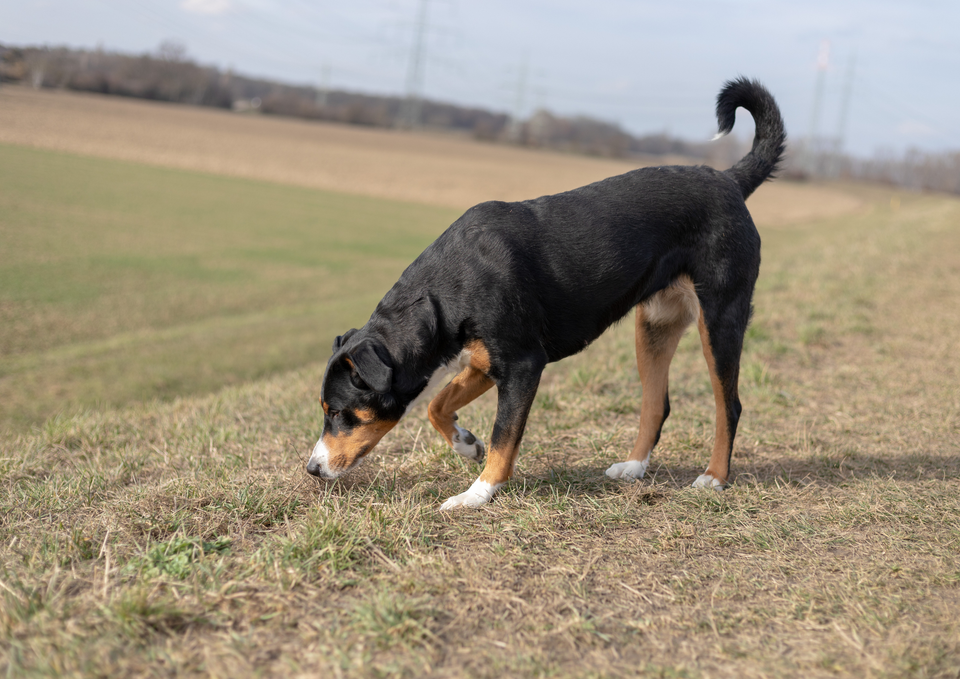
- Excessive sniffing of the ground that seems to appear suddenly and doesn't match the environment — sometimes used as a displacement behaviour to self-soothe or avoid a situation.
- Reduced appetite or refusing treats they'd normally take eagerly, particularly in an environment like a vet's office or a busy event.
- Hypervigilance — a dog who can't settle, keeps scanning the room, or startles at small sounds more than usual.
- Changes in normal habits, like a housetrained dog having an accident, a normally social dog avoiding interaction, or a usually calm dog pacing.
None of these signals are dramatic on their own, which is exactly why they're so easy to miss — they blend into the background unless you're specifically looking for them.
Common situations where stress hides in plain sight
Vet visits, grooming appointments, busy or loud environments, car journeys, being approached by unfamiliar dogs or people, and sudden changes at home (a new pet, a house move, a change in routine) are all common stress triggers. In these situations, it's worth actively watching for the subtle signals above rather than assuming a quiet, still dog is simply calm — sometimes stillness itself is the stress response.
What to do when you spot it
The most useful response is usually the simplest: create space. Move your dog away from whatever's causing the stress, lower the intensity of the situation, and give them time to settle rather than pushing through. Punishing or forcing a dog to "get over it" in the moment tends to add stress on top of stress, and can make a dog less likely to show early warning signs next time, rather than more.
When it's worth extra support
If stress signals are frequent, appear in a wide range of everyday situations, or seem to be getting worse over time, it may be worth looking into more structured support — whether that's adjusting routines, working with a force-free trainer or behaviourist, or ruling out an underlying medical cause with your vet, particularly if the stress appeared suddenly.
The takeaway
Stress in dogs is rarely loud at first — it whispers before it shouts. Learning to spot the quiet signals means you can step in early, keep your dog more comfortable day-to-day, and avoid situations escalating unnecessarily.
Not sure if something you've noticed is a stress signal or just a habit? Dash can help you work out what your dog's behaviour is really telling you.