Dogs have a reputation for being expert nappers — but when your dog is pacing at 2am, restless in their bed, or wide awake and pestering you when everyone else in the house wants to sleep, that reputation stops feeling accurate fast. A dog who won't settle usually isn't being difficult for the sake of it. Something is keeping them up, and it's worth working out what.
How much sleep dogs actually need
Adult dogs typically sleep somewhere between 12 and 14 hours a day, puppies and senior dogs often more, sometimes up to 18-20 hours. That sounds like a lot, but much of it happens in short bursts throughout the day rather than one long overnight stretch like humans. So if your dog seems restless specifically at night, the issue often isn't total sleep quantity — it's the timing and quality of it.
Common reasons dogs struggle to settle
- Under-exercise. A dog who hasn't had enough physical activity during the day often has leftover energy with nowhere to go come bedtime.
- Under-stimulation. Physical tiredness isn't the whole picture — a dog who's physically tired but mentally understimulated can still struggle to switch off.
- Too much stimulation too close to bedtime. Exciting play, visitors, or a late walk in a busy area can leave a dog too wound up to settle straight afterward.
- Anxiety or stress. Separation anxiety, noise sensitivity (fireworks, thunder, traffic), or stress from a change at home — a new pet, a house move, a shift in routine — can all disrupt sleep.
- Discomfort. An unsuitable bed, a room that's too hot or cold, or early signs of joint pain or other physical discomfort can make it hard for a dog to get comfortable enough to settle.
- Needing the toilet. Especially relevant for puppies or older dogs, restlessness can simply be a full bladder rather than anything more complicated.
- Body clock mismatch. A dog whose main walk and mealtimes happen very late in the day can end up on a slightly different internal schedule than the household around them.
- Underlying pain or illness. Sudden changes in sleep pattern, especially in an older dog, can sometimes point to arthritis, discomfort, or another medical issue worth ruling out.
Building a routine that actually helps
Dogs, like most animals, do well with predictability. A consistent structure — regular mealtimes, a proper walk with time to sniff and explore rather than a rushed lap around the block, a calm wind-down period before bed, and a comfortable, appropriately temperature-controlled sleeping spot — tends to make a real difference over a week or two, not just one night.
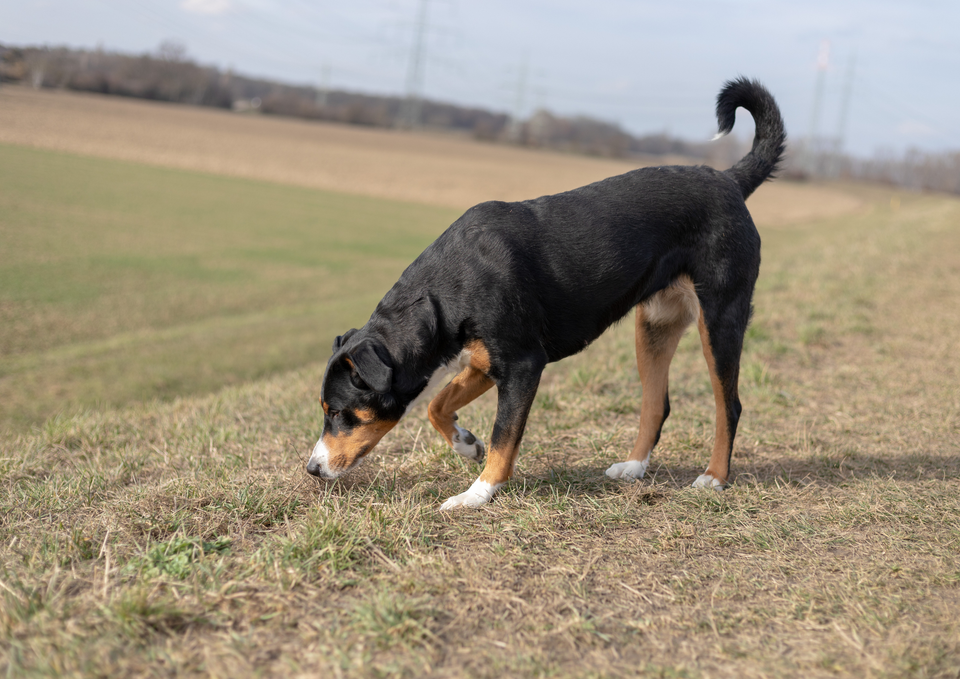
Mental stimulation matters as much as physical activity here. A dog who's had a good sniff-heavy walk, a bit of training, or a food puzzle during the day is often genuinely more settled come evening than one who's simply been walked briskly and left to their own devices.
When it's worth a vet visit
If restlessness appears suddenly, especially in an older dog, or comes with other changes — reduced appetite, stiffness, unusual panting, or general behaviour changes — it's worth getting checked rather than assuming it's purely behavioural. Pain and discomfort are common, often under-recognised causes of disrupted sleep in dogs, particularly as they age.
The takeaway
A dog who won't settle is usually telling you something — too much pent-up energy, not enough mental stimulation, anxiety, discomfort, or a mismatched routine. Most cases improve significantly with a more consistent daily rhythm; persistent or sudden changes are worth a proper vet check to rule out anything medical.
Not sure what's behind your dog's restless nights? Dash can help you narrow down the likely cause and what to try next.