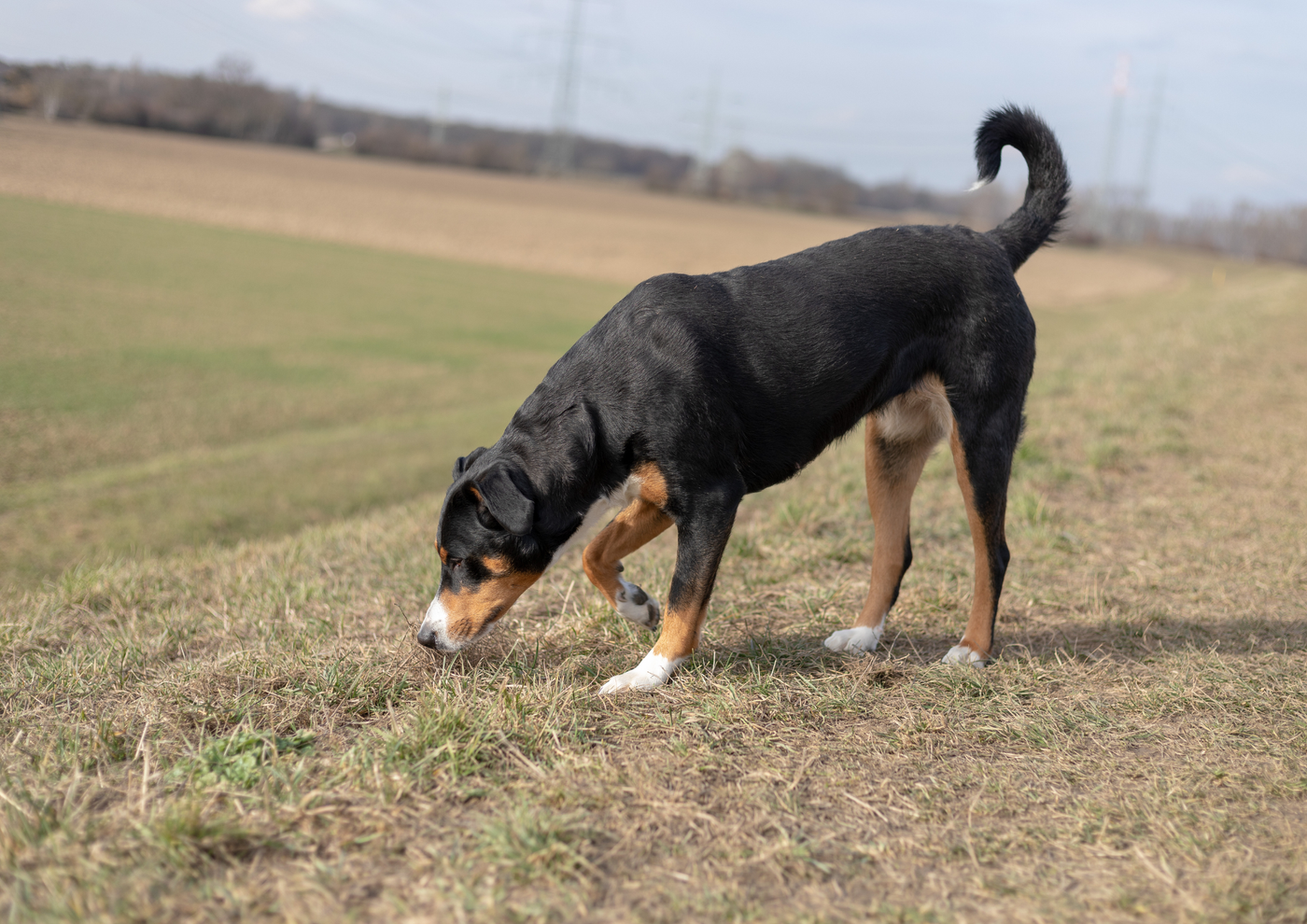
Of all the things dogs do that leave owners baffled and slightly nauseated, this one tends to top the list. It's got a proper name — coprophagia — and it's far more common than most owners realise. Unpleasant as it is to witness, there's usually a fairly ordinary explanation behind it.
It's more common than you'd think
Studies suggest a meaningful percentage of dogs engage in this behaviour at some point, and many do it repeatedly rather than as a one-off. It cuts across breeds, ages, and households, and while it's more often seen in puppies, plenty of adult dogs do it too. Knowing it's common doesn't make it less gross to witness, but it does mean you're very much not alone, and it's rarely a sign that something has gone badly wrong.
Why it happens
- Instinct from puppyhood. Mother dogs often clean up after their puppies, including consuming waste, to keep the den clean and reduce the scent that might attract predators. Puppies can pick up a version of this instinct early on.
- Curiosity and exploration. Puppies investigate the world with their mouths, and poo is simply one more object to sniff, taste, and learn about — most grow out of this naturally.
- Attention-seeking. If eating poo reliably produces a big reaction — shouting, chasing, a dramatic response — some dogs learn that it's an effective way to get noticed.
- Boredom or anxiety. Dogs left under-stimulated or anxious sometimes develop repetitive or unusual habits, and this can be one of them.
- Nutritional gaps or digestive issues. In some cases, an inadequate diet, poor nutrient absorption, or an underlying digestive problem can drive the behaviour, as the dog seeks something missing from their regular food.
- Simple opportunity. Sometimes it really is as straightforward as: it was there, and dogs aren't shy about investigating things that smell interesting to them, however unappealing that seems to us.
Is it actually dangerous?
Occasionally eating another dog's stool isn't usually an emergency, but it does carry some real risk — intestinal parasites, certain bacteria, and other pathogens can be transmitted this way, particularly from unfamiliar dogs whose health status you don't know. It's worth discouraging the habit, both for hygiene and to reduce the (fairly low but real) chance of picking up something unpleasant.
What actually helps
- Manage the environment first. Prompt clean-up on walks and in the garden removes the opportunity before it becomes a habit.
- Rule out medical causes. If the behaviour is frequent or new, a vet check can rule out digestive issues or nutritional deficiencies worth addressing directly.
- Avoid dramatic reactions. Shouting or chasing can accidentally reinforce the behaviour by turning it into an attention-grabbing game — a calm, quick redirect works better.
- Keep them engaged on walks. A dog with enough mental and physical stimulation is generally less likely to default to random scavenging out of boredom.
- Train a reliable "leave it." One of the most genuinely useful commands for exactly this kind of situation, and plenty of others besides.
The takeaway
Coprophagia is unpleasant to witness but rarely a sign of a badly behaved or unwell dog — more often it's leftover instinct, curiosity, boredom, or simple opportunity. A bit of prompt clean-up, consistent training, and ruling out anything medical usually goes a long way.
Worried this might be more than just a habit? Dash can help you work out whether it's worth a vet visit or just normal dog behaviour to manage.