Bringing your puppy home is an exciting milestone, and before long you'll be making another important journey together: their first visit to the vet.
Many new owners feel nervous about this appointment, especially if they have never owned a dog before. The good news is that first visits are usually calm, friendly and designed to help your puppy get off to the healthiest possible start.
Knowing what to expect can help both you and your puppy feel more relaxed.
When Should Your Puppy Have Their First Vet Visit?
If you've collected your puppy from a responsible breeder, rescue or rehoming centre, they may already have had an initial health check and their first vaccinations.
Even if they have, it's a good idea to register with your chosen veterinary practice and arrange an appointment within the first few days of bringing them home.
This allows your vet to:
- Check your puppy's overall health.
- Review any vaccination records.
- Discuss parasite prevention.
- Answer your questions.
- Build a relationship with your puppy from an early age.
Regular positive experiences at the vet can make future visits much less stressful.
How to Prepare Before the Appointment
A little preparation goes a long way.
Bring any paperwork you received when collecting your puppy, including vaccination certificates, microchip details, insurance documents and information about worming treatments.
Write down any questions beforehand. New puppy owners often forget what they wanted to ask once they arrive.
Useful questions might include:
- Which food should I provide?
- How much exercise is appropriate?
- When can my puppy go for walks?
- What flea and worm treatment do you recommend?
- When should they be neutered?
- How do I know if they're growing normally?
If your puppy is travelling by car, make sure they are safely secured in a crate or with a dog seatbelt harness.
Helping Your Puppy Feel Comfortable
Your puppy's first impression of the veterinary clinic can shape how they feel about future visits.
Take some tasty treats with you and reward calm behaviour throughout the appointment.
Speak in a relaxed, cheerful voice. Puppies often take their cues from their owners.
Allow your puppy time to look around without forcing them to greet people if they seem unsure.
If your veterinary practice offers "happy visits", where puppies can simply pop in for treats and fuss without an examination, these are well worth taking advantage of.
What Happens During the Appointment?
Every practice is slightly different, but most first appointments follow a similar pattern.
Your vet will begin by asking about your puppy's background, including:
- Where they came from.
- What they are eating.
- How they are settling into their new home.
- Toilet habits.
- Sleeping routine.
- Behaviour and confidence.
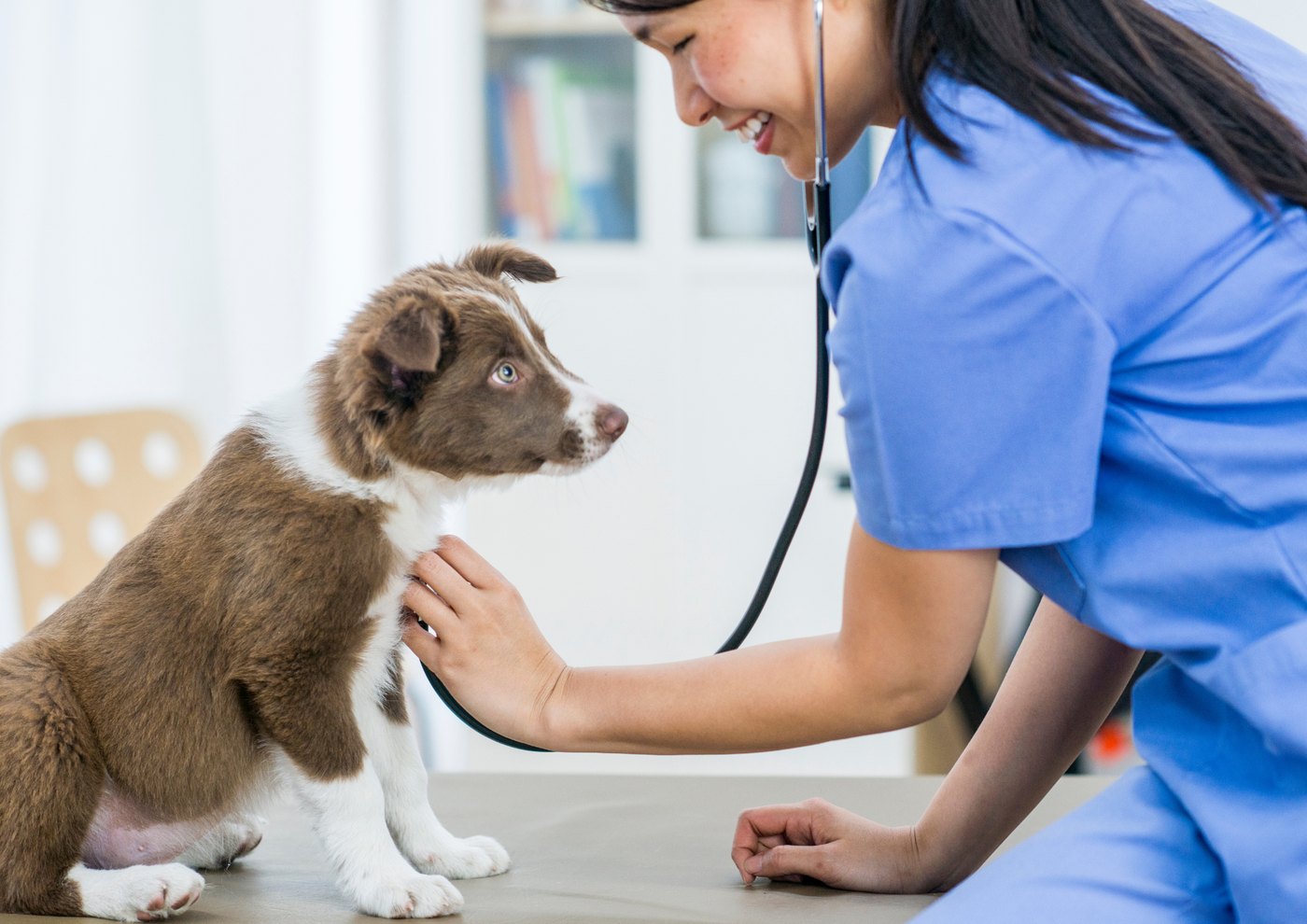
Next comes a full physical examination.
Your vet will usually check:
- Eyes and ears.
- Teeth and gums.
- Heart and lungs.
- Weight and body condition.
- Skin and coat.
- Legs and joints.
- Belly and internal organs.
- Temperature if needed.
This examination helps identify any health concerns early.
Vaccinations
If your puppy is due vaccinations, these may be given during the appointment.
Your vet will explain:
- Which diseases the vaccines protect against.
- When the next vaccinations are due.
- When your puppy can safely begin exploring outside.
Vaccination schedules vary slightly depending on the vaccine used and your puppy's age.
Flea, Tick and Worm Prevention
Young puppies are particularly vulnerable to parasites.
Your vet will recommend an appropriate treatment plan based on your puppy's age, weight and lifestyle.
They can also explain how often treatments should be given as your puppy grows.
Microchip and Identification
If your puppy has already been microchipped, your vet may remind you to update the registered contact details into your name.
If they have not yet been microchipped, your vet will discuss when this should be done.
Remember that keeping your contact details up to date is just as important as having the chip itself.
Feeding and Growth
Puppies grow rapidly during their first year.
Your vet can advise whether your puppy is a healthy weight and whether you're feeding the correct amount.
Bring the name of the food your puppy is currently eating, along with the feeding guide if possible.
Avoid making sudden changes to their diet unless your vet recommends it.
Behaviour Questions
Your puppy's first appointment is a great opportunity to ask about behaviour.
Many owners have questions about:
- Biting and chewing.
- Toilet training.
- Crying at night.
- Socialisation.
- Jumping up.
- Basic training.
Your vet may answer these directly or recommend a qualified trainer or behaviour professional if extra support would help.
Questions You Shouldn't Feel Embarrassed to Ask
There are no silly questions when it comes to your puppy's health.
Veterinary teams answer the same concerns every day, whether you're worried about sleeping habits, loose stools, puppy hiccups or unusual behaviour.
Asking early can often prevent small problems becoming bigger ones later.
After the Appointment
Your puppy may feel a little sleepy after vaccinations, but many continue playing as normal.
Follow any advice your vet gives about exercise, feeding or monitoring for mild vaccine reactions.
Before leaving, book any follow-up appointments so you don't forget.
Final Thoughts
Your puppy's first vet visit is the beginning of a partnership that will support them throughout their life.
Most appointments are straightforward, reassuring and full of useful advice. With a little preparation and plenty of treats, your puppy can learn that visiting the vet is simply another positive part of their routine.
The more confident and relaxed those first experiences are, the easier future check-ups are likely to be for both of you.