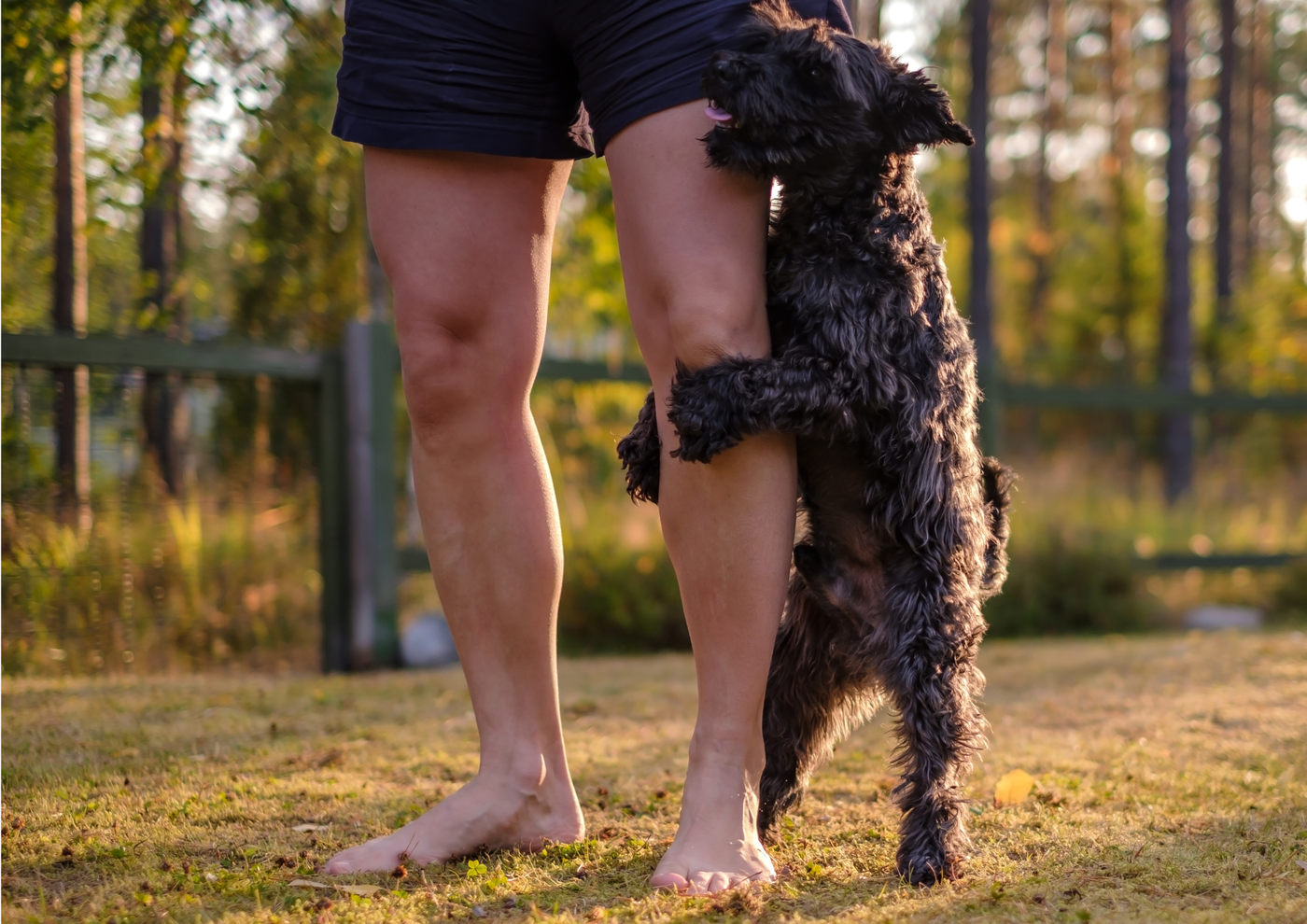
Few dog behaviours cause quite as much owner embarrassment as humping — especially when it happens to a visitor's leg, a cushion, or another dog at the park in front of an audience. But before the mortification sets in, it's worth knowing that humping is one of the most misunderstood behaviours in dogs, and it's rarely about what people assume it's about.
It's usually not sexual
This is the biggest misconception. Humping is commonly assumed to be purely a mating behaviour, but it shows up in puppies, neutered dogs, spayed females, and dogs of the same sex just as often as anywhere else. In most cases, it has very little to do with reproduction and a lot more to do with excitement, stress, or plain old habit.
The most common reasons
- Overexcitement. Play sessions, greetings, or high-energy moments can tip a dog into an aroused, overstimulated state, and humping becomes an outlet for that excess energy.
- Stress or anxiety. Some dogs hump in situations that make them uneasy — a busy environment, an unfamiliar dog, or a stressful change at home. It functions a bit like a nervous habit.
- Attention-seeking. If humping reliably gets a big reaction — laughing, shouting, being picked up — some dogs learn it's an effective way to get noticed, and repeat it accordingly.
- Habit or self-soothing. For some dogs it simply becomes a repeated behaviour pattern, done more out of routine than any specific trigger.
- Play or social behaviour. Among dogs, humping can be part of rough play or a way of testing social dynamics, particularly in adolescents still working out the rules.
- Genuine sexual behaviour. In intact dogs, hormonally driven humping does happen, especially around a female in season — but this is one reason among several, not the default explanation.
When it's genuinely not a big deal
Occasional humping — a cushion, a soft toy, a burst of excitement during play — is normal dog behaviour and not something to panic about. It doesn't mean your dog is "dominant," badly behaved, or broken. It's simply one of several outlets dogs have for excitement or stress, and plenty of well-adjusted dogs do it now and then.
When it's worth addressing
Humping is worth managing, rather than ignoring, when it:
- Happens frequently enough to interrupt normal life or become a repeated flashpoint with guests.
- Is directed at other dogs who clearly don't want the interaction — this can escalate tension or trigger a defensive response.
- Seems to come from anxiety or overstimulation rather than simple excitement, and is part of a wider pattern of stressed behaviour.
- Appears suddenly in an older dog with no clear trigger, which occasionally warrants a vet check to rule out a medical cause such as a urinary issue or skin irritation.
What actually helps
Punishing or shouting tends to add stress into a behaviour that's often already stress-related, which can make things worse rather than better. More useful approaches include calmly interrupting and redirecting to a toy or a settle command, reducing overexcitement before it peaks (short, calmer play sessions rather than one long wound-up one), and giving a consistent, boring, non-dramatic response so the behaviour stops being an effective way to get a reaction.
For humping directed at other dogs, gently separating the dogs and giving both a moment to settle is usually enough — it doesn't need to be treated as a crisis, just managed calmly.
The takeaway
Humping looks awkward, but it's mostly about excitement, stress, or habit rather than anything more complicated. A calm, consistent response solves it far more effectively than embarrassment or a telling-off ever will.
Not sure whether your dog's humping is just excitement or something worth a closer look? Dash can help you figure out which — and what to do about it.