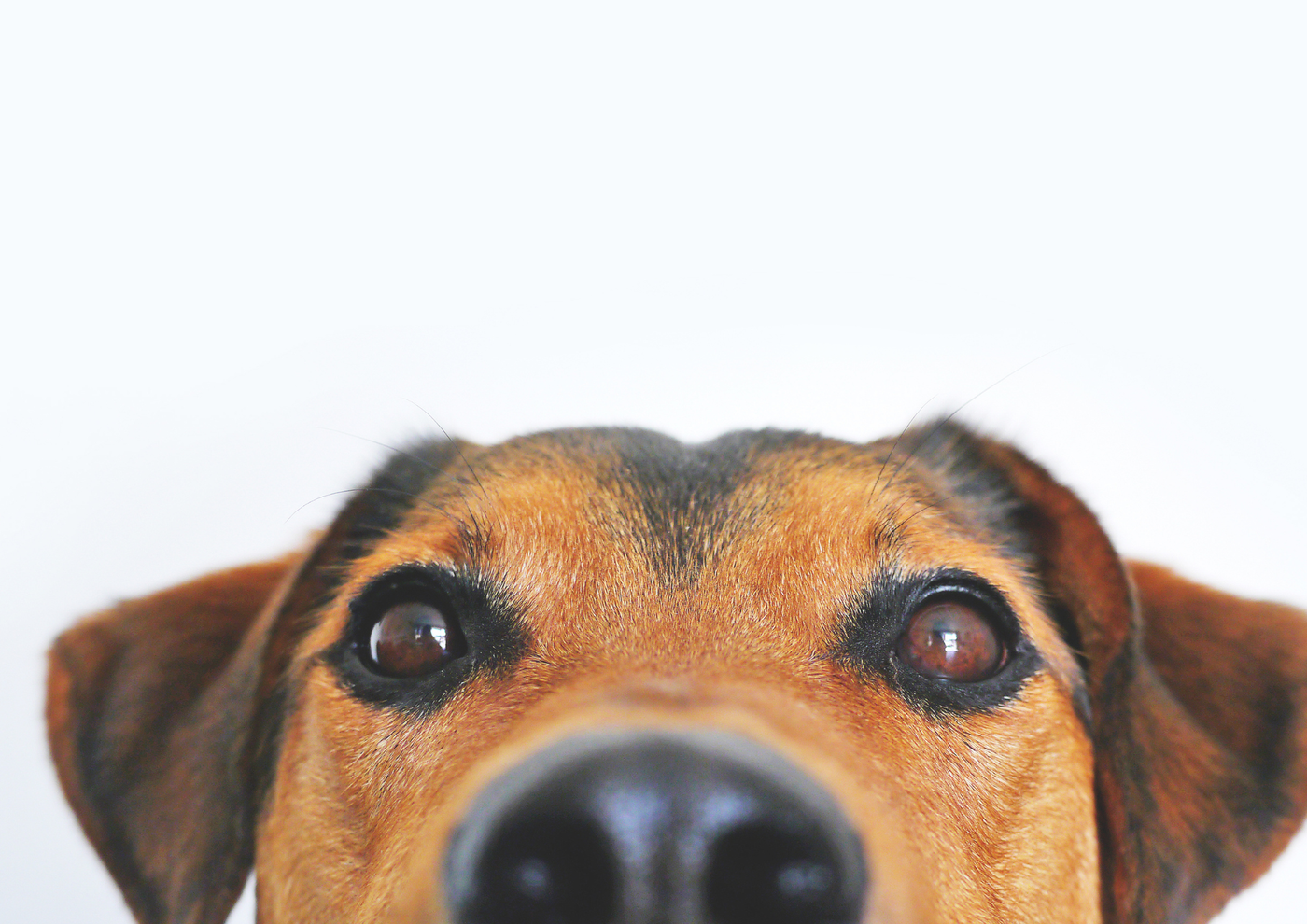
You're eating dinner, working at your desk, or just sitting quietly, and you glance up to find your dog staring directly at you — unblinking, unmoving, utterly focused. It can feel intense, occasionally unsettling, and sometimes very funny. But what's actually going on behind that stare depends a lot on the context.
It's usually about connection, not confrontation
Unlike in the wild, where prolonged eye contact between animals can signal a threat, dogs and humans have developed a very different relationship with staring. Research has shown that mutual eye contact between dogs and their owners actually triggers a release of oxytocin — the same "bonding hormone" involved in human relationships — in both the dog and the person. In other words, that long, soft stare during a quiet moment is often simply affection.
The most common reasons for staring
- They want something. Food, a walk, the ball that's rolled under the sofa — staring is often a direct, unspoken request, especially if it's paired with sitting very close or nudging.
- They're reading you. Dogs are remarkably good at picking up on human facial expressions and body language, and staring is often part of how they gather information about your mood or what's about to happen next.
- Anticipation. If staring reliably happens right before a walk, a meal, or a game, your dog has likely learned that watching you closely gives them an early signal of what's coming.
- Affection and bonding. Especially during calm, relaxed moments — soft eyes, a relaxed body, maybe a slow blink — this is often simply your dog enjoying being near you.
- Confusion or waiting for a cue. Mid-training, or when given an instruction they don't fully understand, dogs often stare as they try to work out what's expected of them.
- Learned attention-seeking. If staring has previously led to fuss, treats, or play, some dogs use it deliberately to get a reaction — much like humping or pawing can become "requests" in their own right.
How to tell the difference
Context and body language matter more than the stare itself. A relaxed body, soft or slightly squinty eyes, and a loose posture generally point to affection, anticipation, or a simple request. A stiff body, hard unblinking eyes, closed mouth, and tense posture — particularly around food, toys, or unfamiliar dogs — can indicate discomfort or guarding, and is worth taking more seriously, especially around children or other animals.
Most everyday staring at home falls firmly into the first category. It's rarely something to worry about, and it's often one of the more touching parts of living with a dog.
When staring might need a closer look
Occasionally, sudden or increased staring can be a sign your dog is uneasy or trying to communicate something specific — discomfort, pain, or anxiety about a change in the household. If the staring is new, comes with other changes in behaviour, or seems anxious rather than relaxed, it's worth paying attention to the wider picture rather than dismissing it.
The takeaway
More often than not, that unwavering stare is your dog quietly saying "I like being near you" or "I'm hoping something good is about to happen" — not judgement, and not a threat. It's one of the small, ordinary ways dogs have adapted to read us, and to be read by us in return.
Wondering what a specific look, posture, or habit your dog has actually means? Dash can help you read your dog a little more clearly.